
Christmas is Still Here
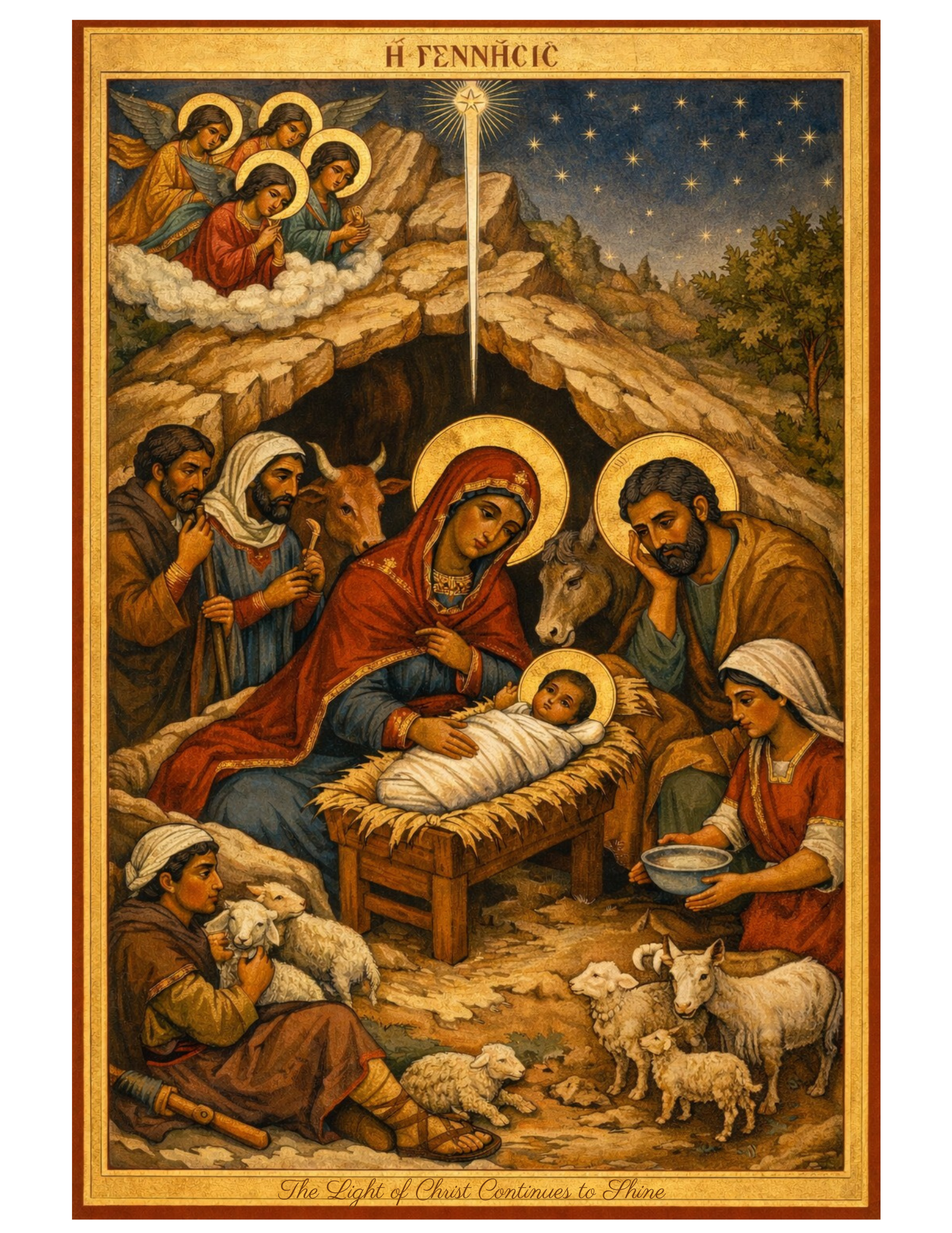
By the time December 26th arrives, the world has usually moved on from Christmas. Store shelves begin to empty of red and green, radio stations shift their playlists, and advertisements urge us toward the next holiday, the next obligation, the next thing to buy. Christmas, it seems, has had its moment, and now it is time to keep going.
But the Church tells a different story.
In the Christian tradition, Christmas is not a single day. It is a season, twelve days in length, stretching from Christmas Day through the Feast of the Epiphany. These days are not meant to be rushed through or checked off a calendar. They are meant to be lived in, lingered over, and prayed through.
That alone makes Christmas a countercultural season.
The Christmas story itself invites us to slow down. The opening of John’s Gospel speaks of God’s creative voice shaping all that exists, of divine meaning woven into the fabric of the universe, and of that meaning choosing to dwell among us. This is not a story that demands urgency or efficiency. It asks for attentiveness. It asks us to pause long enough to notice that God is not distant or abstract, but present, near enough to be touched, known, and contemplated.
Throughout the Christmas season, the Church resists the pressure to move on too quickly. We return again and again to the mystery of the Incarnation, not to solve it, but to sit with it. God does not simply speak creation into being and then remain removed. God enters creation. God takes on flesh. God chooses relationship over distance, presence over power.
That kind of truth cannot be absorbed in a single day.
This season gives us permission, perhaps even instruction, to rest in what has already been given. To ponder what it means that God would care enough about the world, and about us, to be involved at such an intimate level. To consider how divine meaning shows up not only in grand ideas or cosmic laws, but in ordinary lives shaped by love, compassion, and faithful attention.
But resting does not come easily. We live in a culture that values momentum. Productivity. The constant push toward what is next. Even good things, family gatherings, celebrations, or generosity, can leave us exhausted. By the time Christmas Day arrives, many of us are already tired.
The Church’s insistence on a Christmas season is a gentle but firm invitation to do something different. It reminds us that God’s work among us is not rushed, and that our response does not need to be either. There is wisdom in lingering. There is holiness in staying present.
That is why the Sundays that follow Christmas matter.
The First and Second Sundays of the Christmas season are not afterthoughts. They are part of the feast. They continue the Church’s reflection on what it means for God to dwell among us and what that nearness means for our lives. They give us space to listen more deeply, to let the story settle, and to notice where divine meaning is already unfolding in our own experiences.
In these days, faith is less about doing and more about being. Being attentive. Being open. Being willing to trust that God is at work even when nothing feels urgent. The Christmas season gently pushes back against the idea that our worth is measured by speed or output. Instead, it reminds us that we are already held within God’s creative love.
As we continue through these twelve days, you are invited to stay with the story a little longer. To resist the urge to rush ahead. To worship, pray, and reflect with the Church as it keeps Christmas, not as a memory, but as a living reality.
Most of all, you are invited to rest.
Rest in the presence of the God who chose to be near.
Rest in the mystery that gives meaning to the world and to our lives.
Rest in the assurance that God is still here, dwelling among us, even now.
Christmas is not over. Let us take the time to live as though that is true.
Kevin+
