
Transformation, Not Transaction
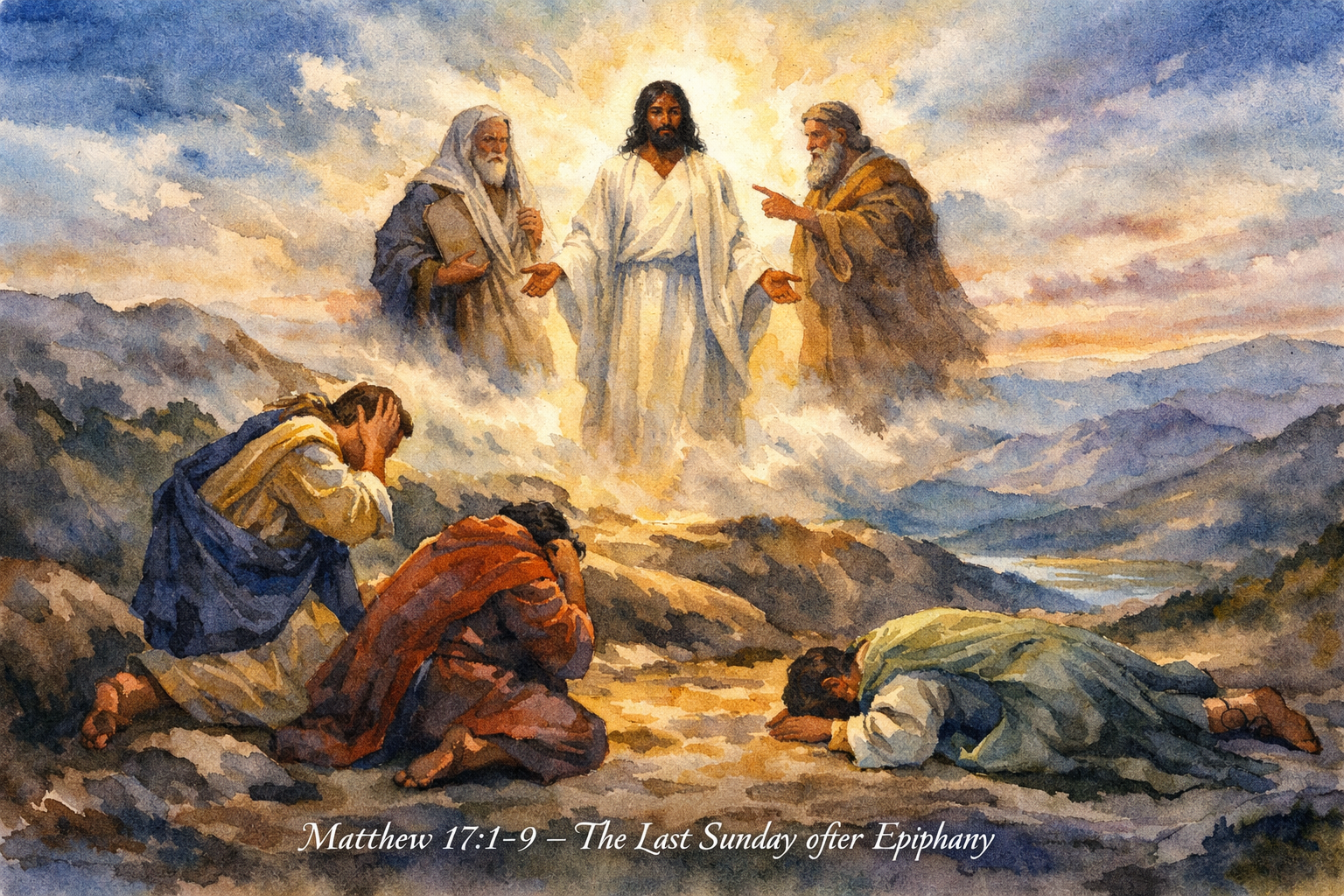
As the season of Epiphany ends, the Church gives us one final moment of light. On the mountain, Jesus is revealed in radiant glory. His face shines, his presence becomes unmistakable, and the disciples glimpse something they cannot fully explain but cannot forget. For a brief moment, heaven and earth feel closer than they have ever been.
This is not something for its own sake. It is a revelation. The light that shines from Christ is not newly created, it is uncovered. The disciples see what has always been true: the fullness of God dwelling in a human life.
Epiphany is a season of seeing. Week after week, we are invited to recognize Christ made known in unexpected places: in water, in word, in ordinary people, and in daily acts of mercy and courage. The Transfiguration stands at the end of this season as its brightest point. It gathers all those moments of recognition into one clear vision. This is who Jesus is. This is the light we have been following. But the story does not end on the mountain.
Peter wants to stay there, hold on to the moment, and build something permanent around it. It is an understandable response. When we encounter clarity, beauty, or holiness, we want to preserve it. We want to stay where faith feels certain and God feels close.
But Jesus leads them back down. The revelation is real, but it is not meant to be contained. The purpose of the light is not to escape from the world. It is to be transformed within it.
This is where the Transfiguration becomes more than a story about Jesus. It becomes a story about us.
The light revealed in Christ is not given to the disciples as a reward for understanding or devotion. It is not transactional. God does not reveal glory in exchange for good behavior or perfect faith. Instead, God draws near, unveils what is already true, and allows that encounter to begin reshaping how people see.
Transformation does not start with striving to be perfect, but to recognize that there is a spark of the Divine within each of us.
In the Psalm for this week, the psalmist speaks of God’s holiness filling the community, not in a distant place but present among the people. God’s glory is not locked away on mountaintops. It dwells in the midst of human life, calling people into reverence, justice, and humility. To encounter God’s holiness is to be changed by it, gradually and often quietly.
That is the pattern we see in the disciples. They do not come down the mountain suddenly perfected. They come down changed in vision. They have seen Christ’s light, and that vision will follow them into every ordinary moment that comes next. Faith works this way still.
We often imagine transformation as something dramatic, immediate, or measurable. We look for clear milestones, visible progress, or spiritual certainty. We assume that if God is at work, we will feel stronger, more confident, and more resolved.
But the light of Epiphany rarely works through big moments alone. More often, it reshapes us slowly. It softens what has hardened. It clarifies what has been clouded. It teaches us not to see Christ only in sacred moments but in human lives: in patience, in endurance, in mercy, and in quiet courage.
This kind of transformation resists the logic of transaction. It does not operate by earning or exchange. It unfolds through relationship. God meets us, remains with us, and over time we begin to reflect what we are learning to recognize.
We start to notice holiness where we once saw only ordinary life. We begin to respond differently to one another. Compassion interrupts judgement. Presence replaces avoidance. Hope pushes against cynicism. These are not sudden achievements. They are signs that the light of Christ is taking root.
The Transfiguration reminds us that glory is not separate from humanity. It shines through it. And if that is true in Jesus, it begins to be true in those who follow him. Not perfectly. Not consistently. But truly. This is both comfort and challenge.
It is comfort because transformation is not dependent on our strength alone. We are not asked to manufacture holiness or force change through willpower. We are invited to remain in Christ’s presence and allow that light to reshape us over time.
It is challenge because once we have seen, we cannot return to seeing nothing. The light of Epiphany exposes what we might prefer to ignore. It reveals where fear has narrowed our vision, where habit has dulled our compassion, where comfort has kept us from growth. To encounter Christ’s glory is to be invited into a different way of living.
The disciples did not fully understand what they witnessed. Even so, the experience stayed with them. It shaped how they listened, how they trusted, how they followed. The memory of that light became a steady guide in moments of confusion and difficulty.
With the Church it is the same way. We are a people shaped by revelation we cannot fully explain. We gather, we pray, we listen, and again and again we are reminded that God’s presence is closer than we imagine and more persistent than we expect. The final light of Epiphany does not leave us on the mountain. It sends us back into the world with new eyes.
We return to our routines, our relationships, and our responsibilities. Nothing outward may look different. But something within us has shifted. We begin to notice grace where we once overlooked it. We begin to honor dignity where the world dismisses it. We begin to trust that God is still at work: in us, in others, and in places we least expect.
This is how transfiguration becomes transformation. Not as a single moment, but as a way of seeing and living shaped by the light of Christ.
And perhaps that is Epiphany’s final gift: the reminder that God’s glory is not distant or reserved for extraordinary people. It is revealed, again and again, in human lives willing to be changed by love.
Kevin+
