
A Faith That Refuses to Stay Hidden
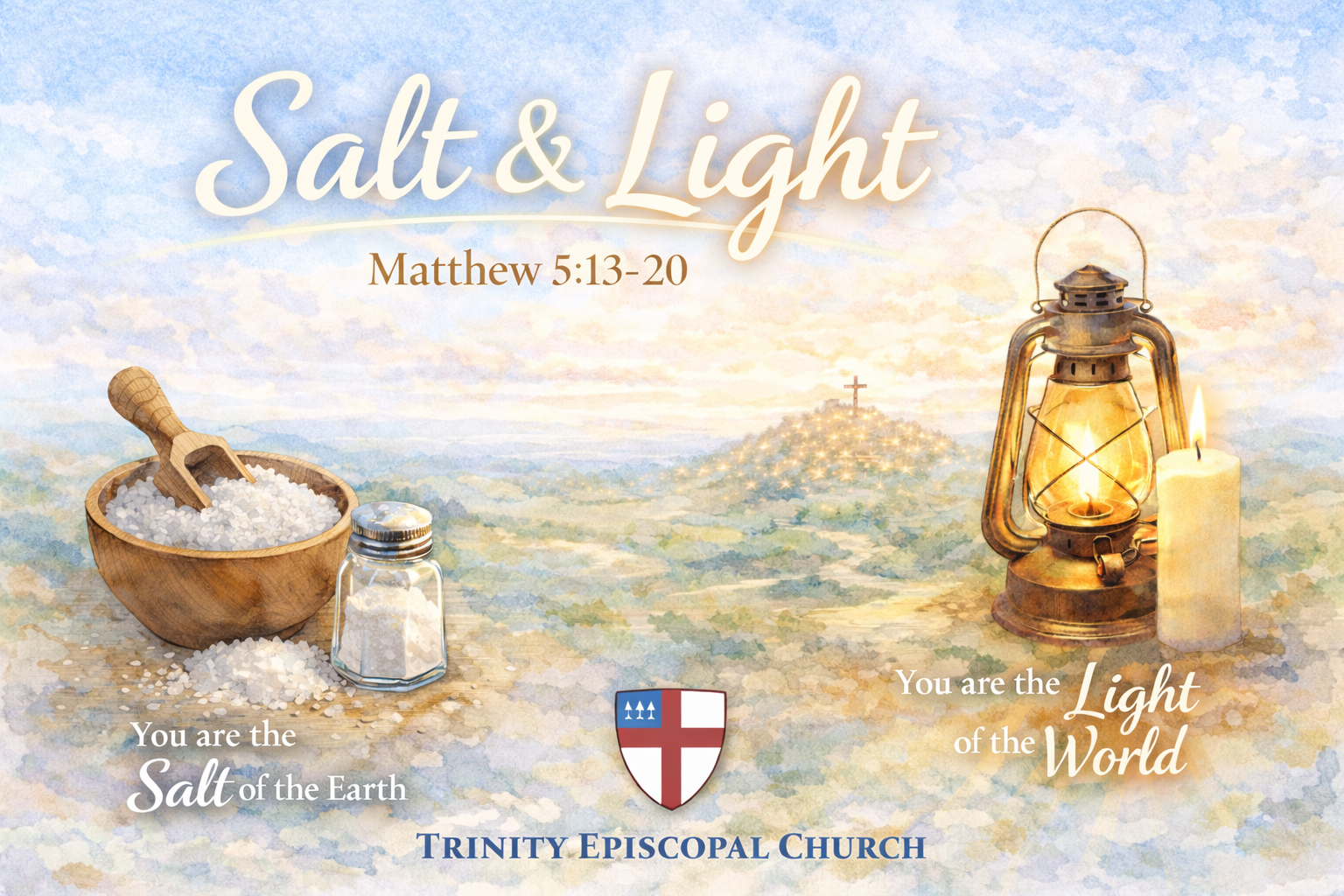
In the Epiphany season, we are reminded again and again that faith is not meant to remain hidden. It is meant to be seen, not as a performance, but as a way of life that reveals the presence of God in the world. The light Jesus brings does not shine only in important moments. It becomes visible in how ordinary people live, speak, choose, and care.
The psalmist describes a life shaped by reverence for God as one that gives freely, acts with justice, and remains steady even in uncertain times. Someone that does this becomes a source of light for others. Their life carries a kind of clarity and trustworthiness that stands in contrast to fear, scarcity, and self protection. This is not about perfection. It is about a life gradually formed by God’s love and oriented toward the good of neighbor and community.
Jesus speaks in similar terms when he tells his followers that they are like salt and light. Salt preserves what is good and brings out what is life giving. Light makes visible what might otherwise remain unseen. These images suggest that faith is not confined to private belief or inward feeling. It has a public dimension. It shapes how we move through the world, how we respond to conflict, how we treat those who are vulnerable, and how we participate in the common life around us.
This kind of visible faith can be uncomfortable. We live in a culture that often treats belief as a private matter and discipleship as a personal preference. At the same time, we are surrounded by competing voices telling us what matters most: success, security, influence, and recognition. It becomes easy to let faith settle into the background, something we carry quietly but rarely allow to shape our public choices.
But Jesus’ words leave little room for that kind of invisibility. Light is meant to shine. Salt is meant to affect what it touches. Faith, if it is alive, will be noticed; not because it seeks attention, but because it changes how we live.
For us at Trinity Church in Muscatine, this invitation is both simple and demanding. Our witness is not measured only by what happens on Sunday morning. It becomes visible in how we care for one another, how we welcome those who are unsure or searching, and how we respond to the needs of our neighbors. It shows up in patience when frustration would be easier, in generosity when scarcity feels safer, and in listening when we would rather speak.
Visible faith also asks something more of us. It confronts the ways we have learned to separate belief from action. It challenges the temptation to remain comfortable, to avoid difficult conversations, or to retreat from the needs of the world. The Gospel does not allow us to be spectators. If we follow Jesus, our lives will inevitably reflect something of his love, his mercy, and his concern for those on the margins.
The Episcopal tradition has long understood this connection between worship and daily life. What we pray shapes what we practice. What we receive at the Communion table sends us back into the world to live differently. Our baptismal promises: to seek and serve Christ in all persons, to strive for justice and peace, and to respect the dignity of every human being; are not just symbolic ideals. They are the visible shape of Christian faith.
But this visibility does not come from our own strength. It is not a project of self improvement or moral effort alone. The light we carry is Christ’s. The faith that becomes visible in us is the work of the Spirit, slowly forming our hearts and communities over time. We are not called to be impressive. We are called to be faithful.
This is good news for ordinary people living ordinary lives. Visible faith is not reserved for public leaders or spiritual experts. It takes shape in quiet decisions, in steady acts of kindness, in the willingness to remain present when others withdraw. It appears when we forgive, when we advocate for someone whose voice is overlooked, when we show up for worship even when life feels heavy, and when we choose hope over cynicism.
At the same time, this calling pushes against our habits. It asks whether we have grown too comfortable with faith that remains private and contained. It invites us to think about where fear, fatigue, or distraction have dimmed the light we carry. And it reminds us that discipleship is not about blending in, but about reflecting a different way of being human; one shaped by grace, mercy, and courage.
Epiphany is a season of revelation. It shows us not only who Jesus is, but who we are becoming as his people. Faith made visible is not about standing out for its own sake. It is about allowing God’s love to take form in our lives in ways that others can recognize and trust. It is about all of us together becoming a community where compassion is practiced, dignity is protected, and hope is sustained.
In a time when so much public life is marked by suspicion, division, and noise, even small acts of faithfulness carry weight. They become signs of another kingdom, one grounded not in dominance or fear, but in grace.
So perhaps the question for this week is not whether we believe, but how that belief is taking shape in what we do and how we live.
Where might your faith already be visible, even in ways you have overlooked?
Where might God be inviting you to step forward rather than remain quiet or comfortable?
And what would it look like, in one small way, to let Christ’s light be seen through your life this week?
Kevin+
