
Why Holy Week Matters
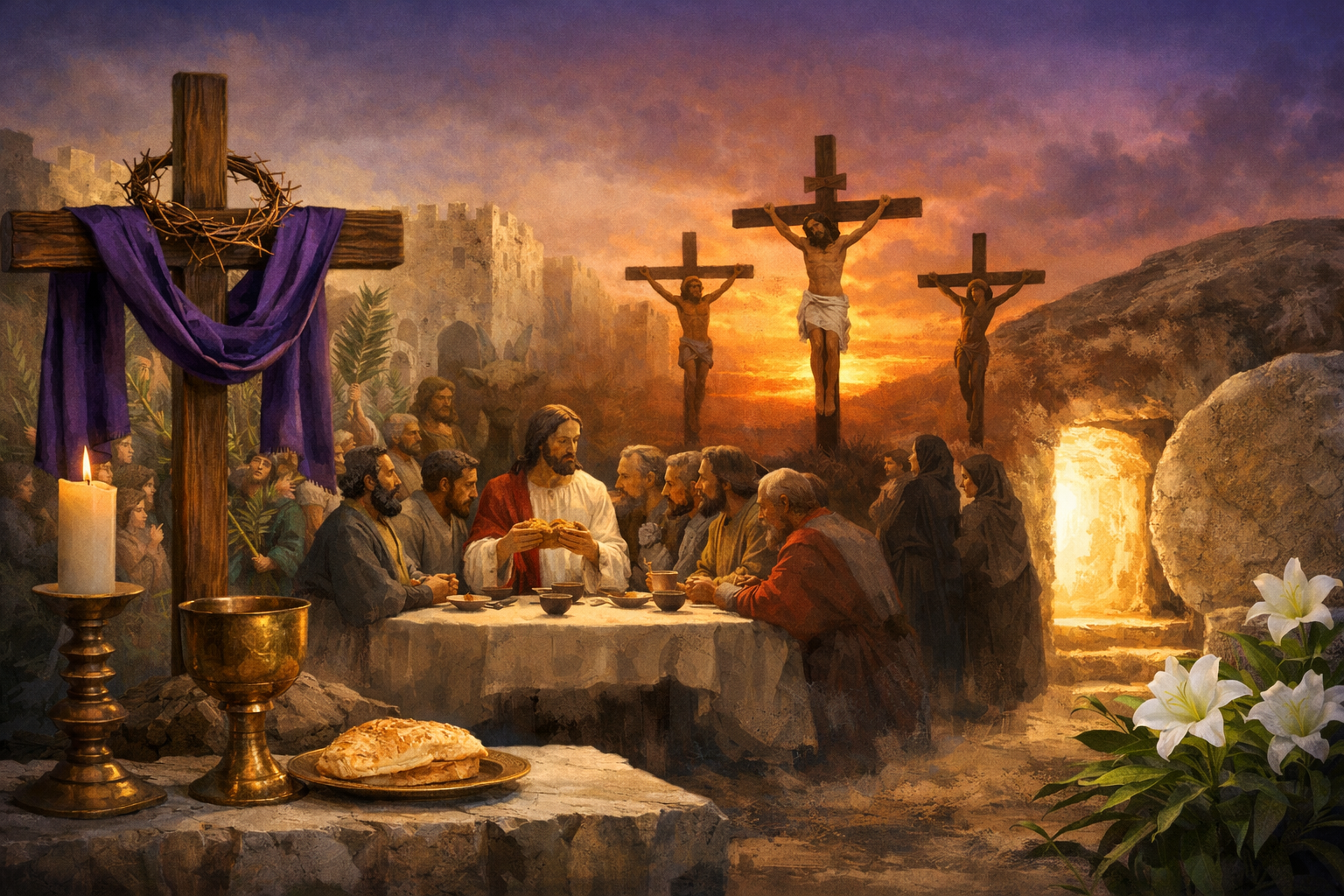
There is a temptation every year to skip ahead.
We move quickly from the waving of palms to the joy of Easter, eager for resurrection, eager for hope, and eager for life. But the Church, especially in our tradition, invites us to slow down. To stay. To walk the whole way.
Palm Sunday, sometimes called the Sunday of the Passion, is where that journey begins in earnest.
It is a day of holy tension. We begin with celebration: palms lifted high, voices echoing “Hosanna,” welcoming Jesus as king. But before the service ends, the tone shifts. The same crowd that shouts praise becomes the crowd that cries, “Crucify him!” We do not watch this from a distance, we participate in it.
This is not meant to make us feel guilty for its own sake. Instead, it is an honest naming of the human condition. We are capable of deep faith and sudden fear, of bold love and quiet betrayal. This Sunday holds up a mirror and asks us to see ourselves clearly, not as we wish to be, but as we are.
And this is precisely where God meets us.
This is not just about what happened long ago, it is about what continues to happen now. How often do we celebrate Jesus in comfort, but resist him when he challenges systems of power, injustice, or even our own assumptions? How often do we prefer a savior who affirms us rather than one who transforms us?
Holy Week does not allow us to remain spectators. It draws us deeper.
On Maundy Thursday, we do not gather in triumph, but in intimacy. We hear Jesus give a new commandment: to love one another as he has loved us. This is not a sentimental love. It is a love that kneels to wash feet. A love that serves without recognition. A love that is willing to be vulnerable.
And then the altar is stripped bare.
Everything familiar is removed. The beauty, the order, the stability; all are taken away. It is a stark and unsettling moment, reminding us that the world can change quickly, that what we rely on can be taken from us, and that Jesus himself was not spared abandonment.
We stand at the foot of the cross and confront the depth of human suffering and injustice. The cross is not abstract. It is the result of political fear, religious rigidity, and the refusal to accept a love that disrupts the status quo. It is the consequence of a world that resists God’s vision of justice, mercy, and peace.
And still, we call this day “good.”
Not because suffering is good, but because God does not turn away from it. In Jesus, God enters fully into the pain of the world: absorbing it, transforming it, and ultimately redeeming it. The cross reveals both the worst of humanity and the relentless, self-giving love of God.
This is why these days matter.
If we rush past them, we risk embracing a shallow Easter, one that celebrates resurrection without truly understanding what has been overcome. But if we stay, if we walk the path from palms to the cross, we begin to see more clearly.
We see the cost of love.
We see the truth about ourselves.
And we see the depth of God’s grace.
Holy Week is not easy. It is not meant to be.
But it is holy because it tells the truth, and because, even in that truth, God is present, calling us not just to witness, but to be changed.
So come.
Come to the table on Maundy Thursday.
Come to the cross on Good Friday.
And let this week shape not only what you believe, but how you live.
Kevin+
