
Breaking Taboos: A Conversation at the Well
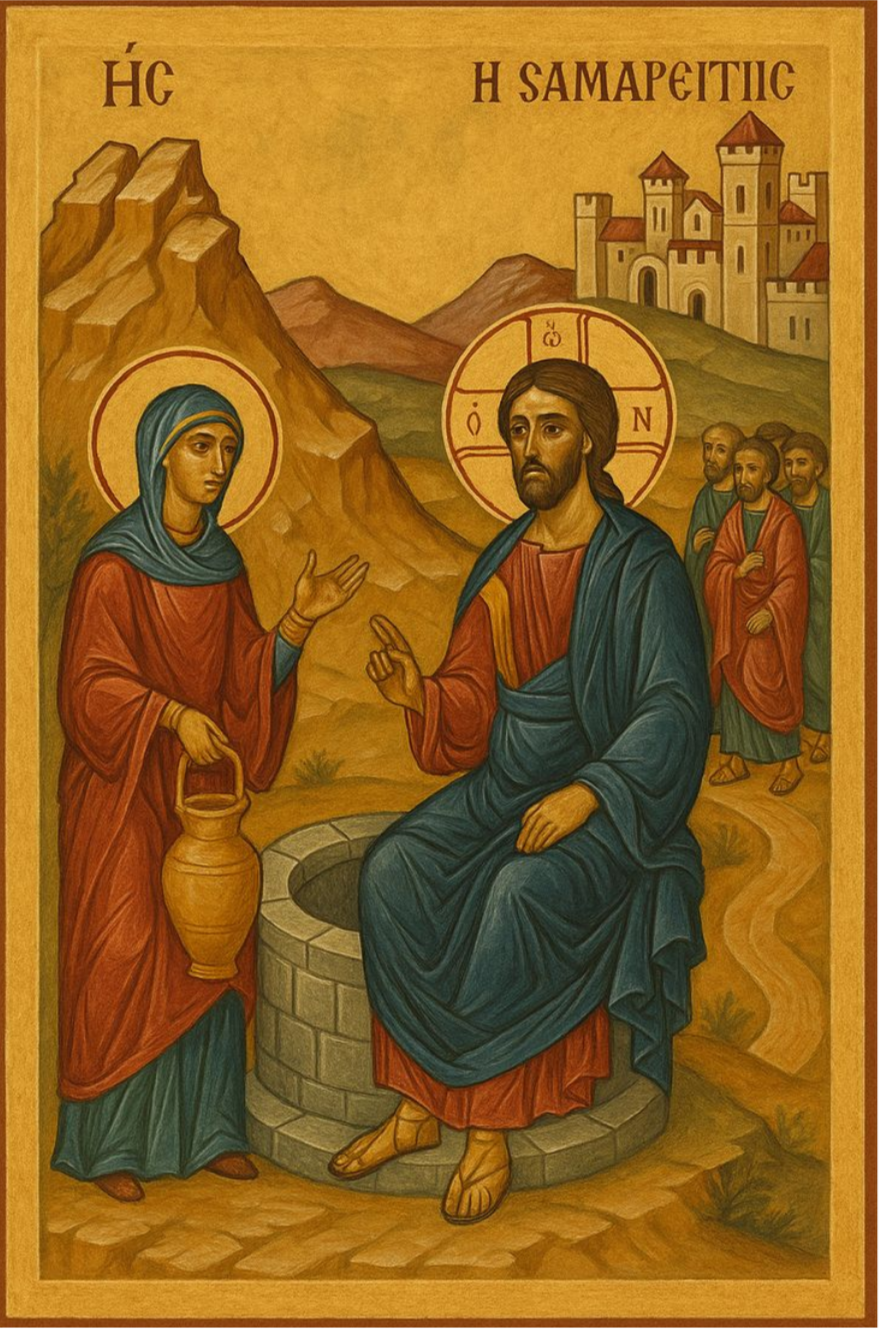
In the Gospel reading for this week, Jesus does something remarkably ordinary. He asks someone for a drink of water.
But in the world in which Jesus lived, this moment was anything but ordinary.
The Gospel of John tells us that Jesus, traveling through Samaria, stops at a well in the heat of the day. A woman approaches to draw water. Jesus speaks to her, asking for a drink. The woman is immediately surprised. She names the reality out loud: Jews and Samaritans did not associate with one another, and a man speaking publicly with a woman who was not part of his family crossed social boundaries as well.
In other words, Jesus has just broken several taboos.
These boundaries were not minor customs. They were the kinds of invisible lines that shaped everyday life: religious divisions, ethnic differences, and social expectations about who belonged where and who was allowed to speak with whom.
But Jesus ignores them.
He does not ignore them carelessly, but intentionally. Jesus sees a human being standing in front of him and begins a conversation. What starts with a simple request for water turns into a deeper discussion about what Jesus calls “living water," the kind of life that flows from God and refreshes the human soul.
The conversation becomes even more surprising as it continues. Jesus speaks honestly with the woman about the complexities of her life. But this honesty is not used to shame her. Instead, it opens the door to a deeper recognition of who Jesus is and what God is doing in the world.
What we witness in this encounter is something central to the Christian story: God’s grace crossing the boundaries that human beings often build.
Throughout the Gospels, Jesus repeatedly moves toward people who were expected to remain on the margins. He eats with tax collectors. He touches those considered unclean. He speaks with people others would avoid. Each time he does so, he quietly challenges the assumptions that separate people from one another.
This story at the well may be one of the clearest examples of that pattern.
The woman who arrives to draw water becomes one of the first people in John’s Gospel to openly recognize Jesus’ significance. And then something remarkable happens: she returns to her community and begins telling others about him. The one who might have been dismissed or ignored becomes a messenger. Breaking taboos, it turns out, is often the beginning of transformation.
The Apostle Paul reflects on a similar truth in his letter to the followers of Jesus in Rome. Paul reminds the early church that God’s love was not revealed after humanity became worthy, but while we were still struggling and imperfect. Christ, Paul says, entered the human story at a time when we were still far from understanding God fully. Grace, in other words, does not wait for perfect circumstances.
This theme runs through the season of Lent. Lent is a time for reflection and self examination, but it is not meant to lead us into despair or isolation. Instead, Lent invites us to recognize both the brokenness of the world and the surprising ways that God’s grace continues to move through it.
The story at the well reminds us that God’s work often begins in places we might now expect, at ordinary wells, in ordinary conversations, and sometimes across the very lines that people have been taught to never cross. For the church today, this story can be both comforting and challenging. It is comforting because it reminds us that God meets people where they are. None of us must become perfect before encountering the grace of Jesus.
But it is also challenging. If Jesus is willing to cross boundaries to meet people, then the church that follows him must continually ask where those boundaries exist in our own time. Where are the invisible lines that separate people today? Who might feel as though they stand outside the conversation?
The Gospel does not give us simple answers to those questions. But it does give us a clear example of how Jesus responds: with curiosity, compassion, and the courage to begin a conversation.
Sometimes the most faithful thing we can do is to follow that example. Perhaps this week we might consider:
Where have I experienced unexpected grace in my own life?
And where might God be inviting me to cross a boundary in order to see another person more clearly?
The story at the well reminds us that the living water Jesus offers does not remain contained. It flows outward, into conversations, communities, and lives that are changed by grace.
Kevin+
